
Growth & conditions
Change a condition and watch this plant answer in its own time.
- Open-ended
- Needs nothing
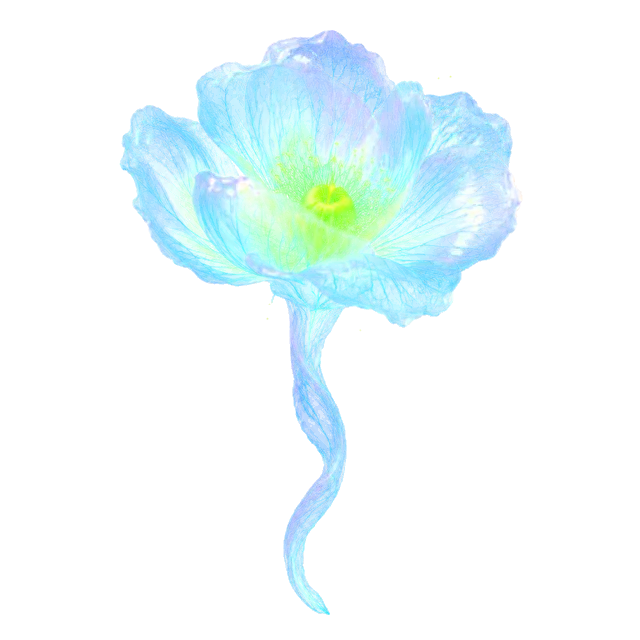
The plant keeps its own time. Skip moves its hours; its answer to a change takes about ten of your minutes.

Aurelia · Artwork
Aurelia in the chamber
The chamber shows the change at once. Save this change to start the plant’s response clock.

A life coming into view…
A drawing of how this plant grows, sped up. Not a video of a real plant.
Preview the four stages
Preview only — does not change your plant
How to read this body
Warmth moves toward amber; cold toward violet and slower motion. Low light dims the tissue; excess light pales upper surfaces. Dry air traces warm edges. Saturated air adds a cool surface sheen.
Dry soil lowers the upper body; excess water darkens the base and also lowers it. Several causes can share a sign. Flabellum’s winter amber and quiet are seasonal, not automatically distress.
These are Xeed’s reversible signals. Actual scorched or dead tissue does not recover simply because a slider returns.
How the model weighs conditions
Tropical hibiscus · form analogue
21–28°C is a proposed Xeed daytime band. RHS supports warm, bright, humid cultivation; its winter minimum is not a growth optimum.
- Proposed day / night bands
- 21–28 °C / 17–22 °C
- Accumulated stress
- 0 / 100
- Resource reserve
- 82 / 100
- Repetition load
- 0 / 100
- Development
- 0%
Response depends on environmental support × reserve × stress × recent repetition × day/night or seasonal activity. These are authored rules. Quiet does not by itself identify its cause. Restoring a slider does not immediately erase accumulated stress.
A proposed seven-day journey (168 real hours) would weigh the four conditions differently at each stage. That timer is not running in this demo; choose a stage to preview it in the film and read its weights.
Proposed sensitivity for the Sealed bud stage of aurelia. Shares add to 100% before rounding. They are authored model weights, not measured biological effect sizes.
| Condition | Sensitivity share | Current load |
|---|---|---|
| Temperature | 31% | 0.0 points |
| Air humidity | 24% | 0.0 points |
| Soil water | 31% | 0.0 points |
| Light | 15% | 0.0 points |
Load = sensitivity share × distance outside the proposed band. Temperature uses the more limiting day or night value. The total is 0.0 / 100 for settled conditions. Reaching the final stage would not guarantee a healthy plant; a pale edge or droop can have more than one cause.
Botanical reference ↗ (opens in a new tab) Environmental signs ↗ (opens in a new tab)
 AureliaDay 1 · Sealed budChamber
Conditions and responses follow authored life rules, not real plant physiology.
Your saved plant · Aurelia
Its conditions and growth stay in your private study. Download a copy any time.